
Get used to it, I’m a precast nerd. API provided the architectural precast cladding for this building (the Delaware Federal Credit Union in Dover). Buff tone precast and some panels with thin brick veneer). Nice stuff. Got a project that has a scope with architectural precast concrete (spec 03450)? Contact me!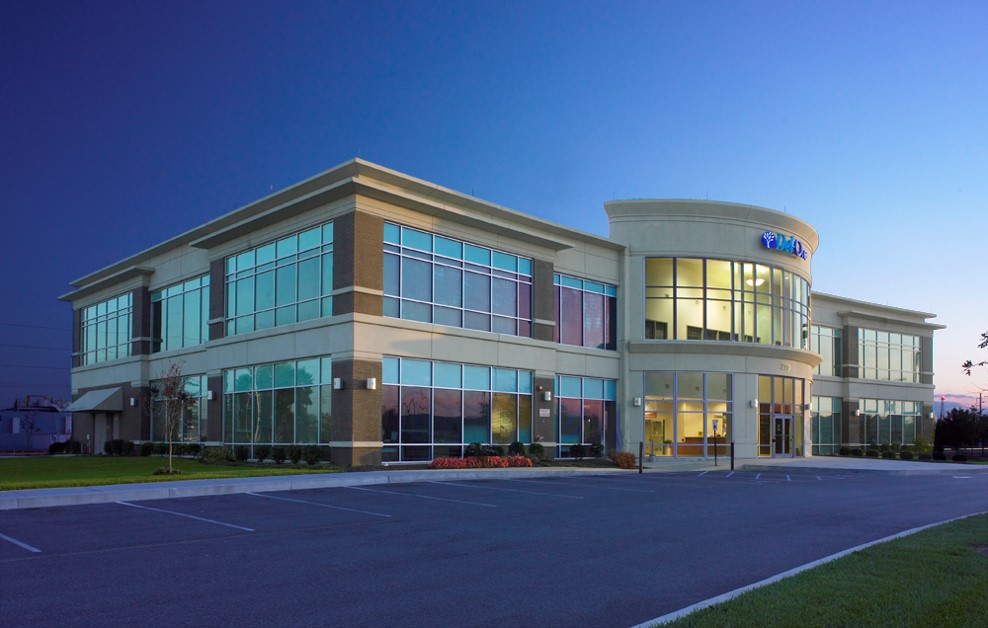
Sandra Palone recently started Sandra Palone & Associates.
It finally happened, I became a full-time Independent Sales Representative at the beginning of September 2015.
My first client is Architectural Precast Innovations, Inc. (API) and they are located in Middleburg, PA. API is a producer of excellent architectural precast concrete and you will find their beautiful product clad on multi-story buildings, such as this example: 137 Franklin Street in New York City. 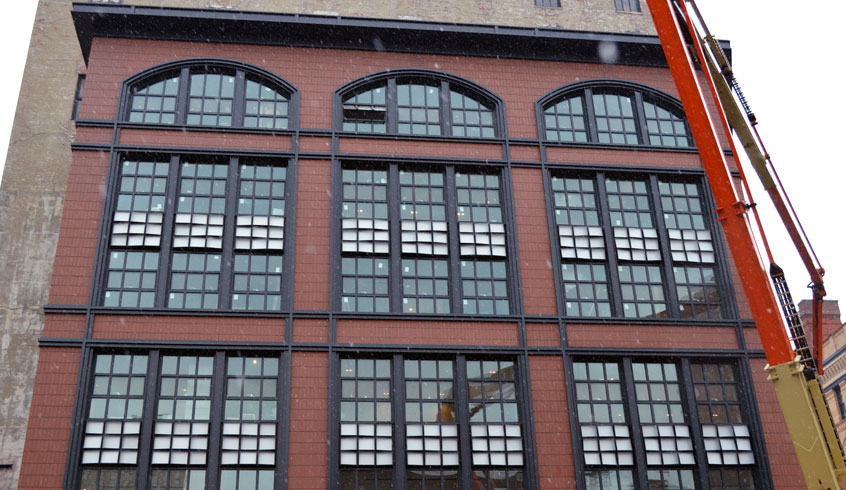
Located at the corner of Varick Street across from Finn Square in New York City’s famed Tribeca neighborhood, 137 Franklin Street is a deluxe seven-story three-family residential condominium building that embodies both the elegance of pre-war architecture and the luxuries of modern-day building systems and new construction.
Owner Brandon Miller of New York-based Real Estate Equities Corporation commissioned Markus Dochantschi, founder of Studio MDA, as architect for the high-end residential building. Because the narrow, vacant lot at 137 Franklin Street is situated in Tribeca’s West Historic District, Dochantschi’s designs required the approval of the area’s strict Landmarks Preservation Committee — including the use of precast concrete for the building’s facade.
If you care to reach me directly through API to learn more about architectural precast concrete, email me at spalone@api-precast.com. You can also visit their website at http://www.api-precast.com
More posts to come of this beautiful product by API.
Follow up, follow up, follow up but don’t be a pest.

Most of us in sales are familiar with following up on opportunities or proposals. I don’t know if there is a secret method that always works regarding order capture, but I do believe I won’t have any luck obtaining work for my company if I don’t have the guts or the energy to follow up.
You and I may vary on our approach. It depends on the circumstances. If you chase work in the Public Sector, there are set rules about letting work. It may be that a public entity first selects a team based on their qualifications and work history. Only after team selection is the proposal written. There is also the private sector that has it’s own rules around awarding work. Here, you may have to be invited before offering a proposal that hopefully meets and or even exceeds the client’s expectations. Sometimes awarded work is selected by being the low bidder. Sometimes it’s a “best value” formula determined by the buyer. Every once in a while, it’s schedule driven.
Are you lucky enough to have some kind of “inside track” about a project or have a very strong sales relationship with the client? If you are, then your chances of winning the work may be higher because you know what the client wants or needs. Maybe you’ve already broken the code as to how the client really buys or maybe you helped them with budgeting prior to a request for proposal (RFP) being advertised. No matter what the criteria is for awarding work, you have to follow up.
If you’re new to the client, then the old fashioned way of follow up and asking for time to review your proposal together or at least get their feedback on your offering is most essential. Regardless if you win the work or not, you need to know where you stand. This is information for the next opportunity at the very least. And I mean more than finding out if you won or lost the work. Ask specific questions about how they selected the winner and what you can do better next time if you weren’t selected. I would also want to know who my competition is on the proposal if I didn’t already know.
There are those proposals that I follow up immediately and those that I follow up at a designated time. If I don’t get the client to communicate with me about my offering in my first attempts, then I have to try back but I usually let them know when that will be so as not to be so persistent that I take the client’s voice mail or email hostage.
I must say though, that early on in my sales career I followed up too intensely. There were people that gave me feedback to not be so “intense” (I thought I was being enthusiastic), to not call so often (I thought I was just being assertive). I had to learn sensitivity with each client. However, there are those clients that if you don’t chase them down, you will never get an answer and they know it and expect you to put in the extra effort. Know Thy Customer!
Communication is key so let people know how you will be communicating with them. After all, it’s only fair to get feedback since you spent time putting together a thoughtful proposal with their needs in mind. But don’t scare them off by being a pest. They may not give you another opportunity for fear you will do the same thing next time. Ask how they want you to follow up PRIOR to giving the proposal. This is being thoughtful of their time.
Lastly, and I feel this is most important, please be gracious when you win and lose work. If you win, be grateful, thank the Client and then knock their socks off with amazing service. If you lose, thank them for the opportunity and congratulate them on their choice. If you really care about them, then be a good sport.
I would like to hear how other people perform follow up so to round out this conversation because every salesperson (or sales process) is different.
Not a fan of the “Ice Cold Call”
I have to say that I am not a fan of the sales “cold call” for a couple of reasons:
1. In the past, when I would show up unannounced at someone’s front desk and ask if I could speak to the President, Manager or Buyer, more often than not that person was “busy” and couldn’t see me right now. Guess what? When someone shows up at my office unannounced (and uninvited), I am also “busy”. Why? To me, the answer is obvious. It’s rude to disrupt someone’s course of business (where they are engaged in making money) without making an appointment first. At least, that is what my Mother taught me (she was also in sales). Nothing like making a first impression by being rude and thinking that the sales person’s agenda is more important than the prospect’s.
2. I feel important to plan a call, not just show up and drop a card. To me, a “cold call” shows lack of planning. Yes, you might get lucky and catch the boss walking past the receptionist’s desk en route to the bathroom. And you may be able to say to your boss that you met the “decision maker” at company X, but that “decision maker” is more likely to throw your information in the trash just as soon as you leave.
If you absolutely MUST do a “cold call”, my suggestion would be to ask the receptionist to give you the name and contact information of the “decision maker” for the company. Leave and THEN make an appointment. It’s the right thing to do. Don’t waste people’s valuable time. Besides, if you make the receptionist uncomfortable with your hanging around their area in hopes to see someone, they will remember you and the boss will be busy in perpetuity.
Just sayin…
Are we having the same conversation?

I saw this funny cartoon today from “Off The Leash” where the owner was telling her dog how happy she was to have the dog be by her side even when she is in the kitchen cooking and the dog’s thought bubble is “blah, blah, blah… will you just stop yakking and drop some food!”.
I absolutely love this because it makes me think how funny it is when I believe I am engaging someone (dogs included here) else in the conversation I want to have and they are having their own thought bubble about how they “really” feel. I must be mindful that I am having meaningful conversations with others that are mutually beneficial. And then…drop some food.
A Late Bloomer Gets Fit – And Finds a New Cause
What do you need? An independent sales rep or a consultant filling a part-time sales role?
What do you need? An independent sales rep or a consultant filling a part-time sales role?
I ask a question like “what do you need? An independent sales rep or a consultant filling a part time sales role” and I bet you’re going to say, “it depends”. As I try to figure out my business model, I would love feedback from business owners as to what they feel they need to help them achieve their goals.
My initial focus is on companies that may need to hire someone like myself to fulfill the role of sales (bring in leads, possibly help write and send proposals, follow up and help negotiating work). How does that sound? Would it be helpful? What about directly marketing your product or service? There are plenty of talented Marketing professionals who create marketing material and platforms. My marketing role would be more direct (such as customer calls, networking, or presentations).
I am open to feedback that business owners may have. Is there another function you need performed?
Thanks.
Thinking of going out on my own.
So, I’ve had this nagging feeling in my gut for a long while. This feeling has a voice and it says, “it’s time for you to do your own thing. Time for you to work for yourself.” I hate being told what to do, and I have become intolerant to someone telling how to do my job. I imagine that I am not pleasant to manage. My co-workers like me and I know my boss likes me but she isn’t too fond of my nature of speaking out. I suppose this trait can either be welcomed by the leader of the company or disliked.
Back to that nagging feeling. I dream of being on my own, working for myself. Setting my own rules and working hard for my customers. The customer is everything to me. My goal is to make customers happy with the work I do for them. If my work is exceptional, then they will prosper. If they prosper, then I will prosper. If I fail, then I have no one else to blame, right? If I succeed, then fantastic.
Does it have to be more complicated than that?
Hey Everybody. First time blogger, obviously.
This is your very first post. Click the Edit link to modify or delete it, or start a new post. If you like, use this post to tell readers why you started this blog and what you plan to do with it.
Happy blogging!
 Sandra Palone and Associates